

Why You Need to Understand Your Attack Surface
Unfortunately, most organizations underestimate how visible they really are.
They think their “attack surface” is only their main website, email servers, or cloud instances.
However, the attack surface goes far beyond that; it includes:
- Executive and employee profiles on LinkedIn, X (Twitter), or TikTok
- Brand and product pages on social media and review sites
- Job listings and recruiting platforms
- News mentions and PR pages that reference outdated links
- Code repositories on GitHub or GitLab
- Old cloud instances and mobile apps that never got decommissioned
Each one carries your brand name or domain, which means attackers can use it to impersonate you, steal data, or spread malware.
How these assets become entry points
Attackers know exactly how to do it and follow a simple pattern:
- Discover it: Find out about any unmonitored or forgotten assets.
- Exploit it: Take over a subdomain, reuse credentials, or post impersonated content.
- Leverage trust: Trick customers, employees, or partners into taking action.
That might mean a fake login page stealing credentials, or a cloned brand page sending malware. Sometimes, the exploit happens inside, like a developer’s old SaaS admin account that no one remembers still exists.
What Are the Most Dangerous Vulnerabilities?
Every week, thousands of new security issues are reported, yet only a few ever turn into real breaches.
So the question isn’t how many vulnerabilities exist, but which ones actually matter to you.
Vulnerabilities come in multiple ways:
- An unmonitored social media account that an attacker takes over.
- A forgotten login page that still works.
- A public API that reveals more data than intended.
- An old vendor connection that never got turned off.
The most dangerous ones are both easy to spot and lead directly to something attackers find valuable.
For example:
- A fake HR portal can steal employee credentials in minutes.
- A shared admin account reused across apps can unlock entire systems.
- A leaked spreadsheet with customer details can trigger fines and loss of trust.
- A neglected marketing tool that still holds customer data.
Each of these sounds small on its own. However, together, they form the path of least resistance… and that’s exactly where attackers go.
What should you do then?
Think of it this way:
If it’s public, valuable, and easy to misuse, attackers will find it first.
That’s why the best security teams don’t try to fix everything at once.
They focus on visibility, knowing what’s online, who controls it, and how it connects to the rest of the organization.
External Attack Surface Management (EASM) can help with that visibility. It maps your online footprint, showing not just what exists but what’s actually exposed.
Once you see everything clearly, it becomes easier to decide where to act first.
How Do You Keep Up as Your Attack Surface Changes Every Day?
Even if you understand your attack surface today, it will probably change tomorrow.
Every week, teams launch new marketing sites, connect new SaaS platforms, or test APIs that never make it into official inventories. Each one adds a new door that attackers might find before you do.
Real-time visibility
As we just mentioned, the attack surface shifts every day as your business evolves.
That’s why continuous visibility matters more than one-time discovery.
External Attack Surface Management (EASM) tools help organizations stay ahead of that change. EASM automates discoverability and gives you visibility beyond your perimeter. More importantly, it continuously scans the open internet, deep web, and dark web for anything tied to your organization.
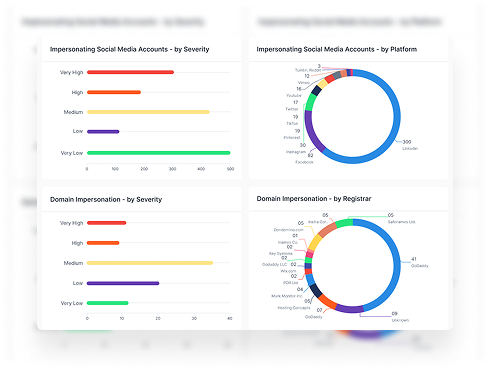
Understanding your attack surface is the foundation for identifying anything that could be damaging to your business, things like cloned websites, rogue apps, fake job postings, and impersonated social media profiles.
How Do You Actually Remediate?
Once you identify an exposure, a leaked credential, a fake website, a lookalike domain, or a login, you need to take action ASAP.
The problem is that most organizations don’t have a clear process for handling these incidents quickly.
These are two ways of doing it:
The manual process
Smaller organizations usually try to handle issues one by one.
They often need to:
- Gather screenshots and links
- Write a report of what they found
- Figure out who owns the platform or domain
- Submit a takedown request
- Wait for approval
- Check again to confirm it was removed
This can take hours for just one incident.
If you only find a few issues a month, it might be manageable.
But the moment something bigger happens, like a wave of phishing domains or a cloned login page spreading across social media… manual work falls behind instantly.
Why large organizations outgrow manual processes
Bigger businesses face a different problem: volume.
When you have hundreds or thousands of employees, multiple brands, dozens of SaaS tools, and global operations, new exposures show up every day.
A single enterprise might see:
- Dozens of new typosquatting domains (learn more about lookalike domains by industry)
- Fake social profiles appearing across platforms
- Leaked credentials posted on dark web forums
- Unprotected cloud services going live without notice
- Fake jobs impersonating your brand
Trying to manage all this by hand is impossible. You’d need a full team doing takedowns all day.
This is where delays happen, and delays are what attackers depend on.
Automation + prioritization
This is why organizations use External Attack Surface Management (EASM).
Because, as you know, discovering risks is one thing; however, the critical part is to take them down as soon as possible.
A good platform will:
- Alert you the moment something suspicious appears
- Identify whether it’s real, active, or harmful
- Prioritize what needs immediate attention
- Help you take action right away
- Reduce the time between detection and response
For example:
If a phishing website impersonates your login page, the platform can flag it as high-risk, highlight the hosting provider, and guide your team through the takedown process, all in one consolidated platform.
If a low-risk domain is sitting inactive, it can be logged for later review instead of interrupting your day.
How Understanding Your Attack Surface Helps with Brand Protection and Digital Trust
When people think about “security,” they usually picture firewalls, passwords, and servers.
But today, one of the biggest risks isn’t inside your perimeter; it’s outside, where attackers impersonate your brand, executives, or staff to mislead your customers.
This is why brand protection and attack surface management are now deeply connected.
You can’t protect your reputation and customer trust if you don’t know what’s happening under your name across the surface, deep, and dark web.
Your brand is now part of your attack surface
Attackers don’t need to break into your network to cause harm.
They impersonate you, and people fall for it because they trust your name.
This can happen anywhere:
- A fake website impersonating your login page
- A phishing domain with one tiny change
- A cloned mobile app using your logo
- A fake LinkedIn profile impersonating one of your executives
- A customer service account on social media sending malicious links
- A fake job posting collecting personal information
Each of these uses your identity to trick people.
And when customers get scammed, they blame you, not the scammers.
EASM strengthens digital trust
When customers, partners, and employees interact with your brand, they expect your digital presence to be safe and authentic.
External Attack Surface Management helps keep that trust by:
- Detecting impersonation attempts early
- Tracking new lookalike domains
- Monitoring rogue apps or cloned pages
- Checking social platforms for fake profiles
- Searching the deep and dark web for leaked data
- Alerting your teams when something unusual appears
This lets you take down harmful content before it spreads, respond quickly to threats, and make sure your official channels stay trusted.
Why this matters for your reputation
Reputation isn’t built in your security tools; it’s built in the experiences people have with your brand.
When scams spread under your brand, people lose confidence.
They hesitate before clicking your emails, buying from you, or trusting your announcements.
Protecting your attack surface means protecting:
- Your customers
- Your revenue
- Your public image
- Your relationship with your audience
It also reduces the burden on support teams, who often become the first to hear about fake messages and suspicious links.
When you respond quickly, you show people that you take their safety seriously, and that builds trust.
Curious to learn more about how you can protect your brand, customer trust, and reputation?
Connect with our team to see live how our platform works.