

Most organizations track their own systems well, servers, cloud apps, endpoints, and internal vulnerabilities.
However, some of the highest-impact threats today don’t come from inside your network.
They come from the systems you connect to, depend on, or allow into your systems.
Guess what that is?
Well… that’s third-party cyber risk, the exposure created by vendors, SaaS platforms, service providers, partners, and anyone who stores, processes, or accesses your data.
What Is Third-Party Cyber Risk?
Third-party cyber risk is the exposure created when an external service or vendor that stores your data, interacts with your team, or connects to your infrastructure gets compromised.
This includes:
- SaaS tools your team uses daily
- Cloud systems that store internal files
- E-commerce platforms processing customer transactions
- Third-party portals used by vendors or partners
- External marketing, HR, finance, or communication tools
In practical terms, third-party risk exists because:
- You share data with vendors
- Your employees reuse credentials across systems
- Your workflows depend on external platforms
- Trust relationships exist between systems
If a third party is compromised, the impact flows directly to you.
Examples of third-party exposure include:
- Employee credentials leaked from a SaaS provider
- Customer data exposed through an e-commerce platform
- Internal documents stored in a breached file-sharing tool
- API keys or access tokens leaked by a partner system
This risk matters more today because attackers no longer need to break into your environment directly. They can enter through systems you trust and rarely monitor continuously.
Third-Party Risks, And What Counts As High Risk
Most third-party risk assessments stop at questionnaires or compliance audits.
But operationally, risk comes from how attackers exploit the connection between your systems and someone else’s.
Below are high-risk scenarios that consistently lead to incidents.
1. Credential exposure linked to vendors
One of the most dangerous third-party risks is credential exposure.
Employees frequently log into vendor platforms using work email addresses. In many cases, passwords are reused across multiple services.
When a vendor suffers a breach or an employee’s device is infected with malware, those credentials often end up outside your control.
High-risk scenarios include:
- Credentials appearing in public breach datasets
- Credentials shared in underground marketplaces or forums
- Credentials originating from stealer malware infections
- Accounts tied to file storage, collaboration, or admin access
Once exposed, these credentials can be sold, reused, or weaponized without any technical exploitation.
2. Vendor platform breaches
When a vendor is breached, the question is not if your organization is affected, but how much.
Risk depends on what data you store with the vendor and how integrated the system is with your operations.
High-risk vendor breaches typically involve:
- Storage of sensitive internal documents
- Access to employee or customer personal data
- Integration with authentication or identity systems
- Use across multiple departments
In many cases, organizations only learn about these breaches after data has already been published or sold.
3. Impersonation using vendor identity
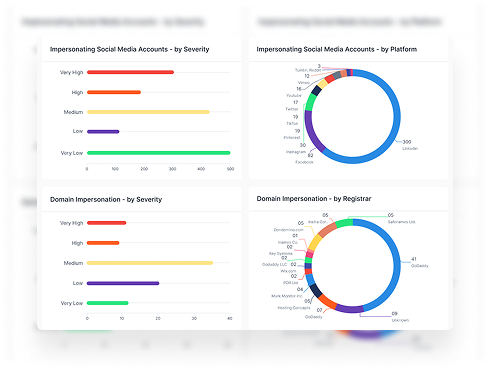
Attackers frequently impersonate vendors (logo, colours, messaging, visual identity) to target employees and customers. Learn more about identity and the new attack surface.
They do this because vendor brands are trusted. Emails, login pages, ads, and support messages that appear to come from a known platform are far more likely to succeed.
Common impersonation methods include:
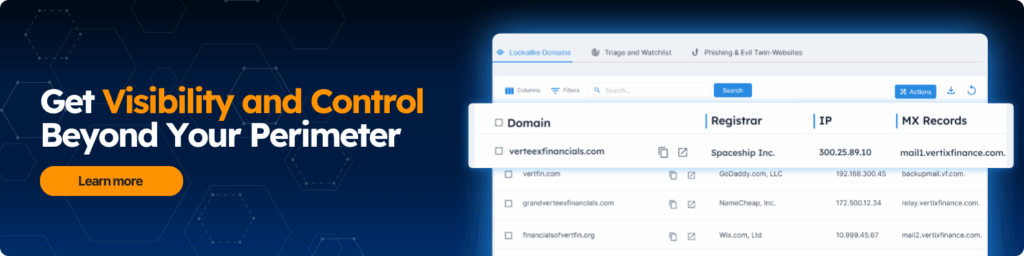
- Lookalike domains mimicking vendor login pages
- Fake support pages requesting credentials
- Sponsored ads impersonating vendor services
- Social media accounts posing as vendor support teams
This type of attack often follows a real vendor breach, but it can also occur independently.
4. Operational dependency on weak vendors
Some vendors are deeply embedded in business operations. Payroll systems, HR platforms, identity providers, and financial tools all fall into this category.
If these platforms lack strong security controls, they create a single point of failure.
High-risk indicators include:
- Weak or inconsistent MFA enforcement
- Outdated or vulnerable infrastructure
- Publicly exposed assets with known weaknesses
- Repeated appearance in breach or ransomware reports
As you can imagine, the more operationally critical the vendor, the higher the risk.
5. Lack of continuous monitoring
Many organizations assess vendors once during procurement and then rely on periodic reviews. However, vendors change:
- Their infrastructure
- Their employee access
- Their security posture
- Their exposure across the internet
Always remember, risk is not static.
High risk indicators:
- No real-time monitoring of vendor credential exposure
- No visibility into new domains or impersonation attempts
- No alerts on vendor mentions in dark web or Telegram channels
- No process for takedowns when attackers impersonate the vendor
How Attackers Weaponize Your Third-Party Ecosystem
Attackers do not treat vendors as separate from your organization. They treat them as extensions of your environment.
Below are common attack workflows, based on real-world patterns seen across industries.
Workflow 1: Compromised vendor credentials = direct access
- Vendor employee device infected
- Stealer malware captures all saved passwords
- Credentials sold privately or bundled with others
- Attackers log in using valid credentials
- Access to files, internal data, or integrated systems
This workflow works because vendor accounts are trusted by default. Once attackers log in with real credentials, there are often no alerts, no blocked actions, and no clear indicators of compromise. From a security perspective, it looks like a normal login.
In many cases, these accounts have access to shared folders, customer records, internal documents, or administrative functions. Attackers can quietly extract data or use the access later for impersonation and fraud.
This is how many large incidents now begin.
Workflow 2: Vendor breach = your data exposed
- Vendor suffers a breach
- Your data stored on their platform is extracted
- Ransom not paid = data published or sold
- Your employee or customer data becomes public
When vendors are breached, organizations often assume the impact is limited to the vendor itself. In reality, any data stored on that platform becomes part of the breach.
This can include employee credentials, customer information, internal files, exports, or logs. Once published, that data becomes a resource that attackers reuse repeatedly.
Attackers use this information to craft convincing phishing messages, impersonate your brand, or target specific employees using details pulled directly from the breach.
Even if the original breach is old, the data can remain useful for years.
Workflow 3: Impersonating the vendor to target your team
- Attackers create a domain that looks like the vendor
- Launch lookalike pages, password resets, or job postings
- Employees or customers interact with the content
- Credentials stolen or payments redirected
This workflow relies on trust, not technical weakness. Employees are far more likely to engage with a message that appears to come from a platform they already use.
These impersonation campaigns often mirror real vendor workflows, including login screens, ticket systems, or update notifications.
During major vendor incidents, attackers frequently take advantage of confusion by launching these pages while people are expecting legitimate communication.
The result is credential theft, account compromise, or financial fraud, all without touching your internal systems.
Workflow 4: Vendor used as a stepping stone into your environment
- Vendor system integrates with yours (API, SSO, shared tools)
- Attackers compromise a vendor account
- Access expands through integrations and trust relationships
- Internal systems become exposed
Modern environments rely heavily on integrations. Vendors connect to internal tools through APIs, shared credentials, or federated authentication.
When one of these trusted connections is abused, attackers can move laterally without triggering traditional perimeter defences. What began as a third-party compromise becomes an internal incident because the systems were designed to trust each other.
This is how attackers exploit trust relationships rather than technical vulnerabilities.
Why most teams underestimate third-party exposure
Most organizations understand, in theory, that third parties introduce risk. The problem is how that risk shows up in real life. It does not look like a clean alert or a clear incident. It appears quietly, outside the tools teams rely on every day.
There are four consistent gaps that cause third-party risk to be missed until it is too late.
1. Internal-only monitoring
Most security programs are built to detect what happens inside the organization.
They focus on:
- Endpoints and devices
- Network security
- Identity events
- Internal logs and alerts
What they do not see are the early signals that come from outside. Things like vendor credentials appearing in underground channels, fake vendor login pages targeting employees, or stolen data being discussed in private forums.
By the time internal tools detect something, the damage often started weeks earlier through a third party.
2. Overconfidence in MFA and SSO
Multi-factor authentication and single sign-on reduce risk, but they do not eliminate it, especially across third-party platforms.
In cyber attacks, access is often gained without breaking MFA directly.
This happens when:
- Attackers steal credentials that already have active access
- Login approvals are pushed to email or SMS accounts that are already compromised
- Vendor platforms enforce weaker security rules than your internal systems
- Shared or legacy vendor accounts bypass MFA altogether
In many cases, attackers are not breaking authentication. They are reusing access that was already granted and never properly limited.
This is especially common with third-party tools where security settings vary, accounts stay active longer, and monitoring is limited.
Once access exists, MFA does not help if no one is watching how that access is used.
3. Underestimating how vendors store or expose internal data
Employees regularly upload sensitive material to third-party platforms as part of daily work.
This includes:
- Internal documents
- Customer exports
- Credentials and configuration files
- Logs and reports
Once that data leaves your environment, it follows the vendor’s security posture, not yours. If the vendor is breached or misconfigured, your data becomes exposed without any direct compromise of your systems.
Many teams only learn this after the data is already circulating.
4. No single owner for external risk
Third-party exposure does not belong cleanly to one team because it touches:
- Security
- IT
- Procurement
- Legal
- Compliance
- Risk
When ownership is split, response slows down. Alerts get passed around, decisions stall, and attackers gain time.
The lack of a clear owner often turns a manageable issue into a full incident.
Early Warning Signs Your Vendor Ecosystem is Already Compromised
Third-party attacks rarely appear without warning. Signals usually show up long before employees are targeted or customers are affected.
These signals often include:
- Vendor-related credentials appear in stealer logs
- Vendor domains show up in dark web marketplaces
- Threat groups advertise access to systems your team uses
- Fake login pages mimic vendor workflows
- Ads impersonate vendors to target employees
- Internal documents appear on Telegram channels
- New lookalike domains reference both you and your vendor
Individually, these signs may look minor. Together, they often point to an attack that is already forming.
Teams that track these signals can act early. Teams that do not, usually learn about the issue after damage is done… So, keep an eye out there.
How companies can monitor and reduce third-party cyber risk in real time
Reducing third-party risk is a lot more than reviewing vendor questionnaires once a year. It requires continuous visibility into how vendors, credentials, and impersonation activity appear across public and private channels.
A practical monitoring model includes the following elements.
1. Build an external inventory that includes all third-party systems
It’s obvious, but you can’t protect what you can’t see, so you need inventory that goes beyond your owned domains.
It should include:
- Vendor domains and subdomains
- SaaS platforms connected to your organization
- Cloud applications storing internal data
- Public buckets and development environments
- Shared portals used by contractors and partners
This inventory becomes the baseline. Anything that appears outside it becomes a signal worth investigating.
2. Monitor credentials linked to third parties
Credential exposure is often the earliest sign of third-party compromise.
These credentials are exposed through a few common paths:
- Public breaches at vendors or SaaS providers
- Private leaks shared in underground forums or marketplaces
- Malware-infected employee or contractor devices that capture saved passwords
You should monitor these external sources to identify credentials associated with:
- Vendor platforms your organization uses
- Employee or contractor accounts tied to third-party services
- Customer-facing platforms operated by third parties
Finding these early allows teams to rotate access, disable accounts, and limit downstream impact before attackers act.
3. Track impersonation targeting vendors you rely on
Attackers frequently impersonate vendors because employees already trust them.
Monitoring should cover:
- Lookalike vendor domains
- Fake vendor support pages
- Impersonated social media profiles
- Pages that replicate vendor login
Stopping these early protects employees, customers, and internal systems.
4. Monitor dark web, Telegram, and marketplaces for vendor mentions
Some of the most important signals never appear in public. They appear on private, underground channels.
These channels often expose:
- Stolen vendor data
- Insider access sales
- Leaked internal documents
- Compromised employee accounts
- Attack planning discussions
Relying only on vendor disclosures means reacting late. Independent monitoring gives you time and control to act as early as possible.
5. Integrate vendor-related takedowns into your response process
When attackers impersonate a vendor, the response should be immediate.
That includes taking down:
- Lookalike domains
- Fraudulent pages
- Impersonated profiles
- Malicious campaigns
- Unauthorized job postings
Takedowns break the attack chain before it reaches employees or customers.
Final Thoughts
Today’s incidents often begin outside your environment, using systems you trust but do not control.
Remember, your third-party ecosystem is part of your attack surface.
In many cases, it’s the largest part, but the least monitored.
If you want to reduce your risk, you need visibility into everywhere your data, your identity, and your access appear outside your perimeter, especially through vendors.
This is the gap Styx is built to close.
Monitor public breaches, private leaks, stealer logs, impersonation campaigns, and third-party exposure so your team can detect threats and act early.