

Most security teams focus on the threats they can see, such as breaches, ransomware, and account takeovers. But some of the most damaging threats grow outside your perimeter, on platforms you do not control, and in places your tools do not monitor.
That is where disinformation lives.
Scammers do not need to break into your systems to cause damage. They can target you from the outside by spreading false content that looks real and feels familiar.
You see it show up in simple ways:
- False posts tied to your brand
- Fake profiles pretending to be executives
- Deepfake audio or video that looks like the real one
- Misleading news stories shared at scale
- Search engine manipulation
- Paid ads that redirect customers to scams
These attacks do not damage your network, but they damage your reputation and customer trust.
The problem?
When trust drops, the business slows across everything: sales, customer confidence, partnerships, employee decisions, and more.
This is why a new function is forming inside cybersecurity: disinformation security.
And most companies will need it far sooner than they think.
Why Disinformation Became a Cyber Problem
Disinformation was once a government and media issue. Today, it affects everyday businesses, executive teams, and anyone with a public presence.
The shift happened for a simple reason: attackers realized it is easier and faster to manipulate people than to hack systems.
Three trends pushed this into the cybersecurity world.
1. Social and news platforms became part of your attack surface
Your company has two main attack surfaces now: Internal and external.
The external/public attack surface includes:
- Social posts
- News coverage
- Online forums
- App stores
- Search results
- Messaging groups
- Comment sections
This is where false content appears first. And because of the nature of these platforms, disinformation spreads long before internal teams know it exists.
When someone posts a fake announcement about your company or impersonates one of your executives, guess what happens? Your customers, employees, and even investors will probably see it first. By the time your team is notified, the content has often reached thousands or millions of people.
Remember, the damage happens outside your walls.
2. Deepfakes made impersonation simple
Deepfakes lowered the barrier for convincing impersonation.
In minutes, attackers can create a voice clone, a fake video recording, or a combined audio-video clip that sounds and looks close to your executive.
This matters because attackers rely on urgency. A deepfake call asking for a wire transfer or a private update can feel legitimate enough to bypass regular checks.
Deepfakes make people second guess what they see and hear, and that uncertainty is all attackers need.
3. Public reactions move faster than incident response
When a misleading post or false claim spreads, your company has minutes to respond because online platforms push content to more people without verifying if it is true.
Here is what usually happens:
- Algorithms amplify the post
- Search engines surface it
- Paid ads help attackers reach more people
- The biggest one… People share it
The longer the content stays up, the wider it spreads.
Most people do not stop to validate what they see, so the false claim becomes the version they believe.
Once that happens, correcting the narrative takes much more effort and time.
The Real Business Impact of Disinformation
Disinformation does not stay online; it affects operations, revenue, and people.
The impact is immediate and measurable.
This is what happens:
Brand trust breaks
Your brand depends on trust. When attackers impersonate your company or publish false stories, that trust erodes. Customers begin to doubt legitimate communication, hesitate to act on updates, or question real promotions and alerts.
You see the impact in:
- Customer hesitation
- Increased support requests
- Confusion inside the company
- Negative sentiment across channels
- Slow adoption of real announcements
Once trust breaks, rebuilding it takes time, effort, and lots of money.
Disinformation leads to direct financial loss
Attackers use disinformation to make scams believable.
They use fake news to support fraudulent claims, fake accounts to request payment updates, and deepfakes to impersonate leaders.
These attacks trigger the following costs:
- Wire fraud
- Customer refunds
- Chargebacks
- Internal investigations
- Legal involvement
- Lost deals or delayed partnerships
Operations slow down under uncertainty
Disinformation creates chaos inside the company.
- Employees do not know which messages to trust
- Teams stop what they are doing to investigate
- Legal steps in
- Communications has to write statements
- Cyber needs to verify the source.
As you can see, a single false narrative can pull time and attention away from core work for days.
What Disinformation Security Actually Is
Disinformation security is the practice of identifying, verifying, and responding to false or misleading content that targets your brand, executives, or customers.
It requires five core capabilities.
1. Visibility into the public attack surface
You need to see what exists outside your perimeter.
This includes:
- Social media platforms
- News outlets
- Search engine results
- Online communities
- Messaging apps
- Dark web channels
- New domain registrations
- Paid ads linked to your brand
Why all this?
Well… because your team cannot protect what it cannot see.
2. Detection of harmful or suspicious content
The goal is to spot harmful content before it gains traction.
Early detection is what prevents false claims, fake profiles, or misleading posts from spreading and shaping the narrative.
Here are the signals you want to catch as early as possible:
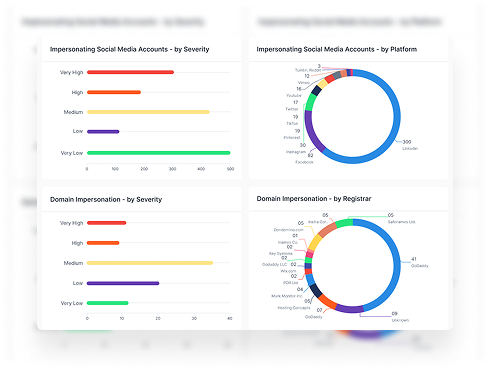
- Fake executive or employee profiles
- False announcements tied to your company
- Deepfake audio or video
- Fake job listings or hiring scams
- Fake customer support using your name
- Impersonation in paid ads
- Abuse or targeted threats
- Leaked internal information
- Posts linked to fraud or phishing attempts
Catching this content early is the whole point. A strong platform alerts you the moment a new fake profile appears, a false announcement starts to spread, or your brand is mentioned in a way that signals risk.
You see the activity before people start reacting to it, which gives you time to verify the content and act on it.
3. Clear classification
You need a way to categorize threats so teams can respond correctly.
Typical classifications include:
- Impersonation
- Misinformation
- Disinformation
- Fraud
- Abuse or violence
- Data leaks
- Brand misuse
Classification reduces confusion and guides decisions.
4. Takedown operations
Once your team confirms the threat, you need a process to take it down.
A strong takedown process covers:
- Evidence gathering
- Documentation
- Submission to the platform or hosting provider
- Follow up
- Escalation to legal if needed
Some cases resolve in hours. Others require persistence.
The faster you act, the less damage spreads.
5. Continuous analysis
Remember, patterns matter.
- Which executives get targeted?
- Which platforms carry the most risk?
- How long do takedowns take?
- Which threats connect to fraud?
- What attackers repeat?
Understanding this helps your team predict and prevent future incidents.
Why Disinformation Belongs With Cybersecurity
Many teams assume disinformation belongs with marketing or communications. They handle public messaging, sentiment, and brand voice, so it sounds like their area. But identifying risk is not their role.
Why not?
- Marketing tools do not detect impersonation
- Communications tools do not identify deepfakes
- Legal cannot discover threats early
- Compliance does not classify malicious behaviour
Cybersecurity is the only function designed to detect, analyze, and respond to threats.
Cyber teams can:
- Understand attacker behaviour
- Run incident response
- Manage external threat surfaces
- Classify risk
- Work with legal and compliance
- Respond with urgency
Disinformation fits that model because:
- It is a threat
- It needs detection
- It needs classification
- It needs a repeatable response
As the problem grows, more companies will pull this function under cybersecurity because the risk lens and response capabilities already exist there.
How to Build Disinformation Security in Your Organization
You do not need a new department to start. You need clarity, structure, and the right visibility.
1. Build an inventory of your public-facing assets
This includes:
- Executives and their profiles
- Official brand accounts
- Product names
- Key domains and subdomains
- Known variations or past impersonation patterns
This inventory becomes the baseline of your monitoring.
2. Monitor social and news channels through a security lens
This is not marketing monitoring; this is risk monitoring because you are not tracking likes or sentiment, you are tracking threats.
This includes:
- Fake executive accounts
- False announcements about your company
- Disinformation and Misinformation campaigns
- Deepfake videos or voice clips
- Paid ads that impersonate your brand
- Fake support pages
- Posts that link to phishing sites
- Search results that redirect people to scams
- Abusive content or threats aimed at employees
- Leaked data circulating in public or semi-public spaces
This type of monitoring tells you when your brand, your people, or your customers are being targeted. It also shows you how attackers use public platforms to prepare or support actual scams.
3. Create a clear takedown playbook
Your team needs to know:
- How to verify the content
- How to collect evidence
- When to involve legal
- Who submits platform requests
- How to document impact
- What timelines to expect
- How to communicate internally
A takedown is incident response for public attacks.
Learn more about how Styx can help you with takedowns.
4. Align cyber, legal, and communications
Each team sees a different part of the picture. Together, they see the whole company exposure.
- Cyber handles detection
- Marketing and Comms handles messaging
- Legal handles compliance and platform rules
This alignment speeds up response time.
5. Train your executive team
Executives are prime targets.
They need to know how deepfake impersonation works and what to do if they see suspicious activity.
Their assistants and chiefs of staff need training as well.
This group often receives the first contact attempt.
The Next Three Years Will Define This Discipline
Disinformation security will become standard practice in cybersecurity.
You are already seeing the signals:
- Executive impersonation is rising
- Deepfakes are cheaper and more accurate
- Fake profiles spread across every platform
- Fraud and disinformation are linked
- Boards ask about brand trust during cyber updates
- Customers expect companies to protect them from scams
- Search and social platforms move too fast for manual tracking
This is the next major shift in how companies think about cyber risk.
Organizations that invest early will reduce confusion, respond faster, and protect trust during critical moments.
If you want to protect your brand and your executives, you need one place to see everything that can put you at risk.
That means your domains, social accounts, external attack surface, third parties, and any public channels where false content spreads.
Styx gives you that visibility in a single platform so you can spot impersonations, harmful content, and exposed assets before they reach your customers. Book a demo to see how it works.